Academic Policies
.
Accreditation & Authorization
Asia Revival University (ARU) is an internationally recognized institution of theological learning and practical Christian ministry that is accredited and specifically commended by the International Theological Accreditation Association (ITAA) for its:
Willingness to develop and formalize academic and assessment governance
Commitment to strengthening quality assurance processes
Intent to build institutional sustainability and accountability
Openness to improving academic structures, assessments, and moderation practices
Clear vision toward structured growth and long-term credibility
Asia Revival University (ARU)
International Theological Accreditation Association (ITAA)
Academic Policies
Attendance and Course Participation for Degree Courses
Students' progress are monitored through regular progress reports. It is the student's responsibility to complete necessary tasks. Attendance will be credited.
Non-Degree Students
No requirement except for a one (1) year-end class paper.
Grade Policies
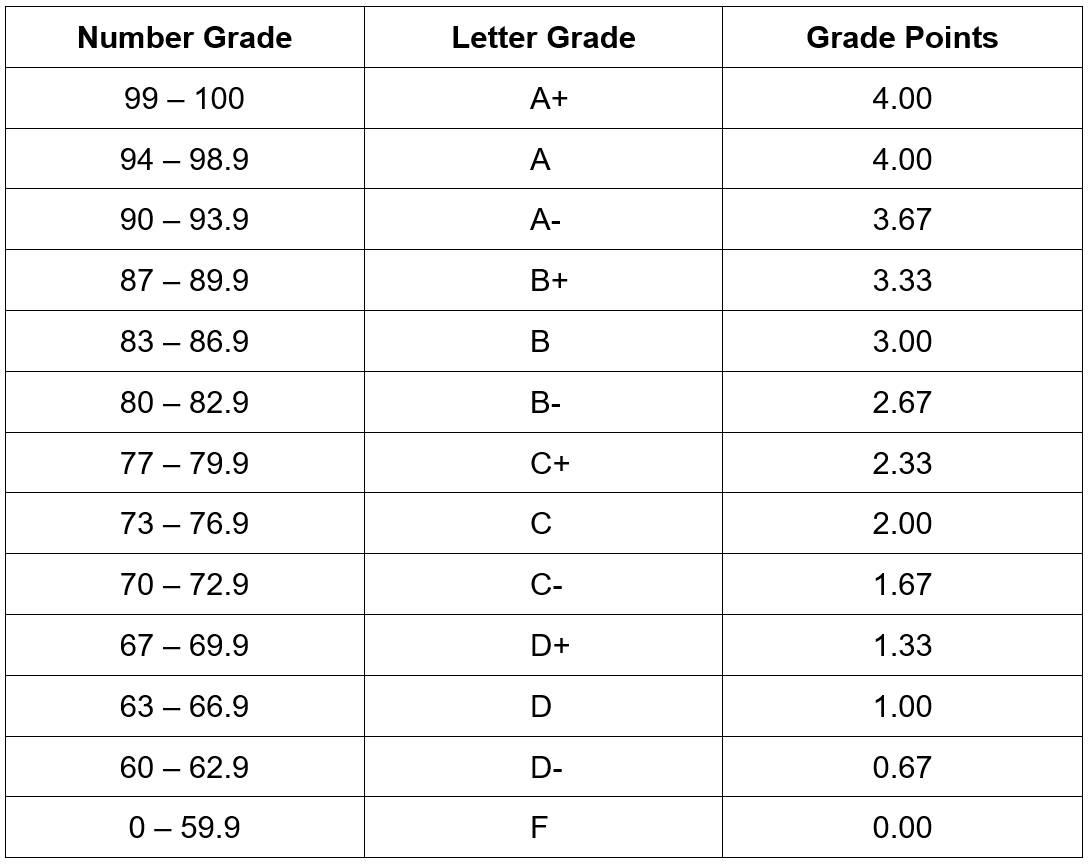
A student must repeat the course in which they received a " F ". All final grades will appear in the transcript of records. In case of a retake, the recent course will be reflected. Approval from the registrar’s office is required for retakes, and the applicable tuition applies.
Grading System
Graduation Requirements
To graduate each student must:
• Complete the curriculum planned.
• Earn a minimum of 0.67 grade point average.
• Receive at least a “ D- ” in all courses.
• Be recommended for graduation by the core leadership.
• Settle financial obligations to the university.
• Attend graduation ceremony, if possible.
Incomplete Course
When a student is unable to complete the requirements of the course, “INC” (Incomplete) remarks will be reflected. A one-month grace period is given to complete the subject(s).
Academic Integrity
Students are expected to live in God’s word and commandments. When students enroll, they are committed to upholding the character of Christ. They are also committed to being educated, trained, equipped, discipled, and mentored. Academic dishonesty should be avoided at all costs, such as:
• A student asks someone to do their assignments on their behalf.
• Asking Artificial Intelligent (AI) to write their papers on their behalf.
• Copying the work of another student.
• Providing false information and false statements.
• Securing reflection from another student.
• Unauthorized collaboration on assignments.
• Plagiarism. The following spectrum can be noted of:
► Student Collusion – Working with other students on an assignment meant for individual assessment.
► Inadvertent Plagiarism – Forgetting to properly cite or quote a source or unintentional paraphrasing.
► Word for Word plagiarism – Copying and pasting content without proper attribution.
► Paraphrase plagiarism – Rephrasing a source’s ideas without proper attribution.
► Self-Plagiarism – Reusing work which was previously published or submitted for another course without proper attribution and/or permission from the instructor.
► Mosaic Plagiarism – Weaving phrases and text from several sources into one’s own work. Adjusting sentences without quotation marks or attribution.
► Source-based Plagiarism – Providing inaccurate or incomplete information about sources such that they cannot be found.
► Software-based Text Modification – Taking content written by another and running it through a software tool (text spinner, translation engine) to evade plagiarism detection.
► Manual Text Modification – Manipulating text with the intention of misleading plagiarism detection software.
► Contract Cheating – engaging a third party (for free, for pay, or in-kind) to complete an assignment and representing that as one’s own work.
► Data Plagiarism – Falsifying or fabricating data or improperly appropriating someone else’s work, putting a researcher, institution, or a publisher’s reputation in jeopardy. https://www.turnitin.com/solutions/academic-integrity/achieving-academic-integrity (accessed on 05/01/2026)
Asia Revival University
© Copyright 2026 Asia Revival University • 202304001107 (LLP0035042-LGN)